
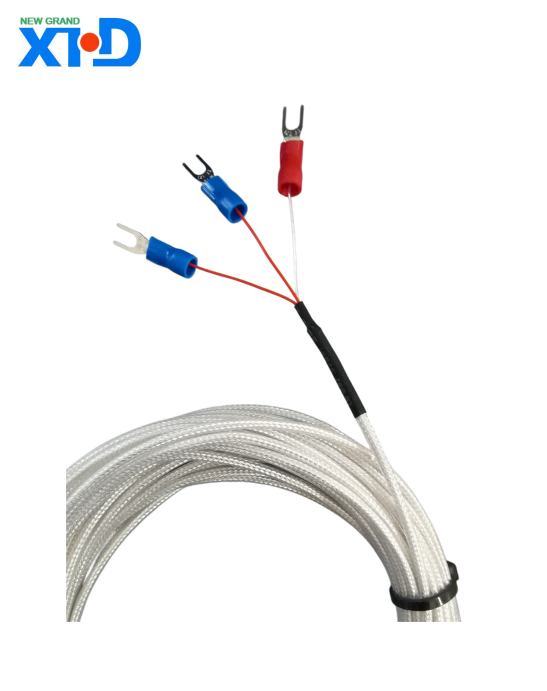
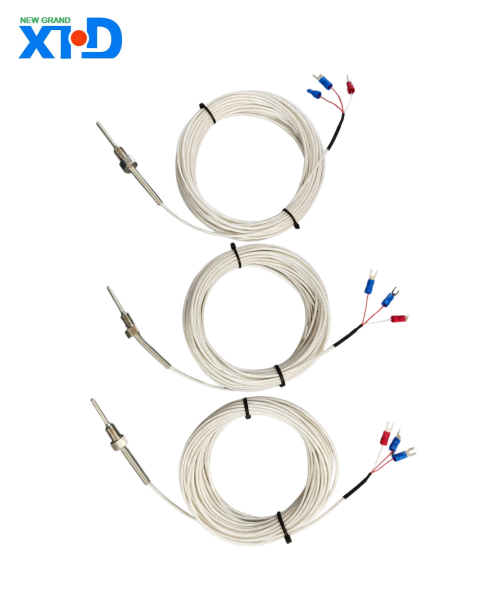
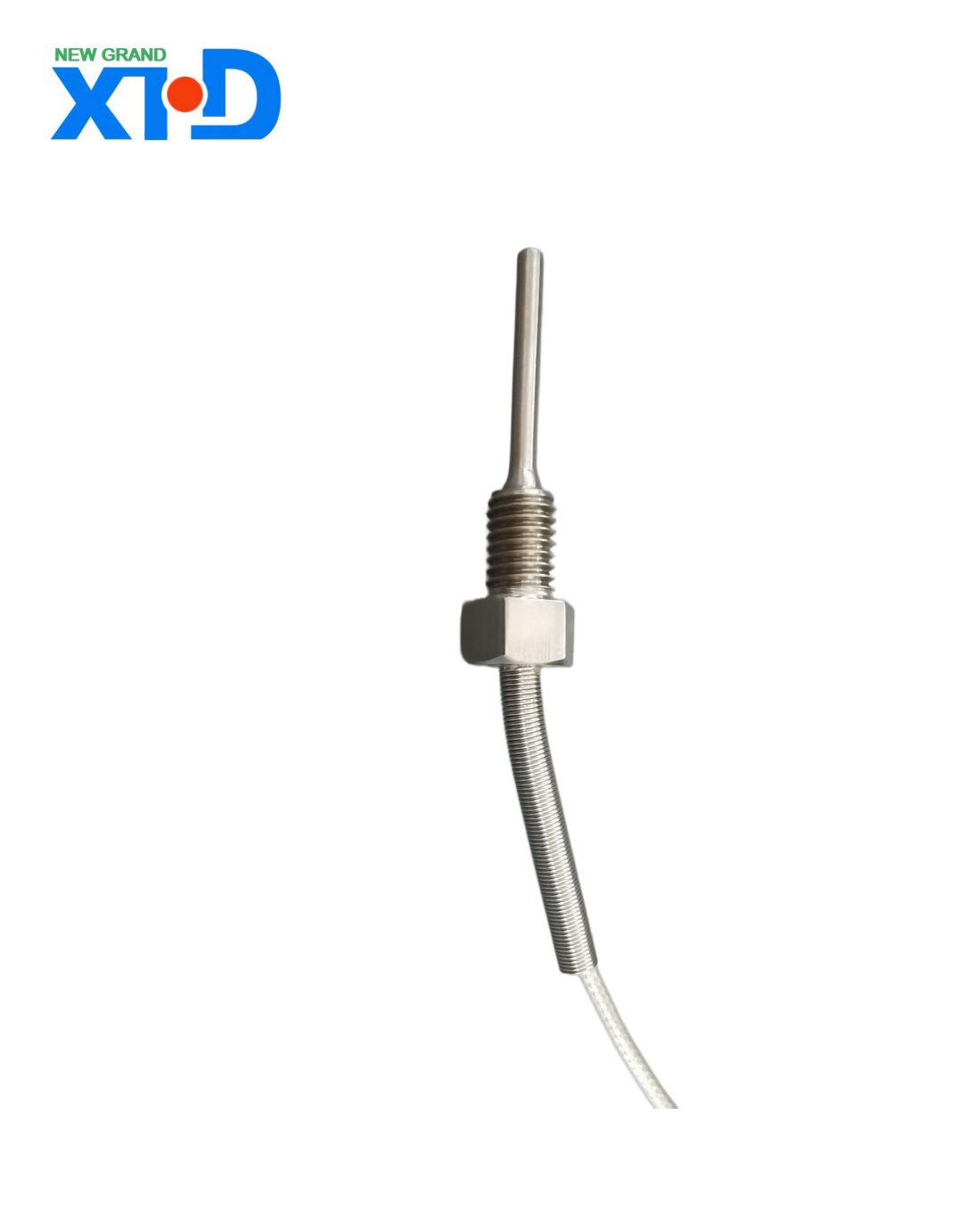
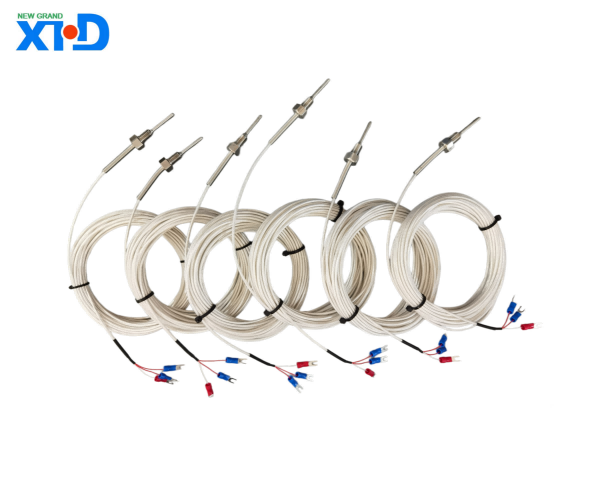
PT100 thermistor, also known as platinum thermistor, is a high-precision temperature sensor based on the temperature dependent characteristics of platinum metal resistance. Its nominal resistance value at 0 ℃ is 100 Ω, which complies with the IEC 60751 international standard. It has become one of the most commonly used temperature detectors in medium and low temperature areas due to its high measurement accuracy, stable performance, good linearity, and wide temperature measurement range. It is widely used in many fields such as industrial automation, medical equipment, meteorological observation, aerospace, and laboratory calibration.
1、 Product Overview
PT100 thermistor, also known as platinum thermistor, is a high-precision temperature sensor based on the temperature dependent characteristics of platinum metal resistance. Its nominal resistance value at 0 ℃ is 100 Ω, which complies with the IEC 60751 international standard. It has become one of the most commonly used temperature detectors in medium and low temperature areas due to its high measurement accuracy, stable performance, good linearity, and wide temperature measurement range. It is widely used in many fields such as industrial automation, medical equipment, meteorological observation, aerospace, and laboratory calibration.
2、 Working principle
The core working principle of PT100 thermistor is to utilize the characteristic of platinum metal's resistance value changing with temperature. The resistance value of pure platinum wire increases almost linearly with the increase of temperature, showing a positive temperature coefficient. When the temperature is 0 ℃, its resistance value is precisely 100.00 Ω; For every 1 ℃ increase in temperature, the resistance increases by approximately 0.385 Ω, and at 100 ℃, the resistance value is approximately 138.5 Ω.
3、 Product type and structure
(1) Type
According to the nominal resistance value at 0 ℃, platinum thermistors are mainly divided into three types: Pt10, Pt100, and Pt1000, with PT100 being the most widely used. In addition, in terms of structural form, PT100 thermal resistors can be divided into assembled and armored types:
Prefabricated: The temperature sensing element is usually made by winding platinum wire around a ceramic, glass or mica skeleton, and then assembling it in a metal protective sleeve. It has the characteristics of simple structure and easy installation, and is suitable for general industrial temperature measurement scenarios.
Armored type: The combination of temperature sensing elements, insulation materials, and metal sleeves is drawn into a solid whole, which has the advantages of good flexibility, strong seismic resistance, and bendability. It is suitable for installation and use in complex and narrow spaces.
(2) Structural composition
The PT100 thermistor is mainly composed of temperature sensing elements, protective sleeves, junction boxes, and leads
Temperature sensing element: It is a core component, commonly including ceramic elements, glass elements, and mica elements, which are respectively wrapped with platinum wire around ceramic skeleton, glass skeleton, and mica skeleton, and processed through complex processes. In addition, there are thin film platinum resistors, which use vacuum deposition thin film technology to sputter platinum onto ceramic substrates with a film thickness of less than 2 microns. Ni (or Pd) leads are fixed with glass sintered materials and made by laser resistance adjustment, which can achieve industrial mass production.
Protective sleeve: used to protect temperature sensing components from corrosion and mechanical damage by the measured medium. The materials usually include stainless steel 201, 304, 316, 316L, etc., which can be selected according to different usage environments.
Junction box: used to connect the leads of thermal resistors and external measurement circuits, with good sealing to prevent dust, moisture, etc. from entering, ensuring measurement accuracy and stability.
Lead wire: responsible for transmitting the resistance signal of the temperature sensing element to external measuring equipment, with three wiring methods: two-wire, three wire, and four wire
4、 Wiring method
(1) Two line system
Connecting a wire at each end of the thermistor to extract the resistance signal is a simple and feasible lead method. However, the lead resistance of the connecting wire can have a significant impact on the measurement results, making it only suitable for situations with low measurement accuracy requirements.
(2) Three wire system
Connect one lead at the root of the thermistor and two leads at the other end, usually used in conjunction with an electric bridge. By using the Wheatstone bridge principle, the influence of lead resistance can be effectively eliminated, making it the most commonly used lead method in industrial process control. It has significant advantages in terms of cost-effectiveness, and the error can be controlled within ± 0.5 ℃ (at 100 ℃).
(3) Four wire system
Connect two wires at each end of the root of the thermistor, with two leads providing constant current to the thermistor, converting the resistance value into a voltage signal, and then directing the voltage signal to the secondary instrument through the other two leads. This wiring method can completely eliminate the influence of lead resistance and has extremely high measurement accuracy. However, the wiring is complex and costly, making it mainly suitable for scenarios such as laboratories that require extremely high measurement accuracy.
5、 Product Features
(1) High precision
The measurement accuracy of PT100 thermal resistance is very high, with standard models divided into Class A and Class B. Class A allows a deviation of ± (0.15+0.002 │ t │) ℃, while Class B allows a deviation of ± (0.30+0.005 │ t │) ℃. Some high-precision products can achieve an accuracy of ± 0.1 ℃ or even higher.
(2) Good stability
Platinum metal has good physical stability and chemical inertness, oxidation and corrosion resistance, stable long-term performance, minimal annual drift, and can ensure the repeatability and reliability of measurement results.
(3) Wide temperature measurement range
Its measurement range covers -200 ℃ to 850 ℃, and can be extended to -270 ℃ to 1064 ℃ in extreme environments, suitable for various medium and low temperature and some high temperature measurement scenarios.
(4) Short response time
Generally, the response time is less than 30 seconds, and it can quickly sense temperature changes and provide timely feedback on measurement data.
(5) Strong anti-interference ability
Compared to other temperature sensors such as thermocouples, PT100 thermal resistors are less susceptible to electromagnetic interference and are particularly suitable for use in complex industrial electromagnetic environments.
6、 Product application scenarios
(1) Industrial production field
Metallurgical industry: used to monitor the internal temperature of equipment such as blast furnaces, converters, and electric furnaces, as well as temperature control during steel heat treatment processes, to ensure the stability of production processes and product quality.
Petrochemical industry: Real time monitoring of medium temperature in equipment such as reaction vessels, distillation towers, and pipeline systems in refineries and chemical plants to prevent risks such as chemical reaction loss of control, medium solidification, or leakage caused by abnormal temperature.
Power industry: Used for temperature monitoring of transformer windings, iron cores, busbar bars, as well as key components such as circuit breakers and contactors in distribution cabinets for substations, to timely warn of overheating hazards and avoid accidents such as short circuits and fires. In the field of new energy generation, such as photovoltaic module arrays and inverter cooling systems in photovoltaic power plants, generator compartments, gearboxes, bearings, and other parts of wind power generation, temperature monitoring is used to optimize equipment operating parameters, improve power generation efficiency, and extend equipment life.
Mechanical manufacturing industry: Temperature monitoring is carried out on multiple parts such as the spindle, mold, and hydraulic system of CNC machine tools, die-casting machines, and injection molding machines to determine the operating status of the equipment and prevent mechanical failures and accuracy degradation caused by overheating.
(2) Medical industry
In medical equipment, such as refrigerated containers for vaccine transportation, temperature monitoring probes in ICU wards, medical sterilization equipment, etc., PT100 thermistor can provide high-precision temperature measurement, ensuring the safety and effectiveness of medical processes. For example, during vaccine transportation, real-time monitoring of the temperature inside the refrigerator ensures that the vaccine remains within the specified temperature range and maintains its activity.
(3) Agriculture and Cold Chain Logistics Industry
Smart Agriculture: In large greenhouses and breeding sheds, automatic temperature control and ventilation are achieved through multi-point temperature monitoring, combined with IoT platforms, to ensure stable crop growth and livestock breeding environment.
Cold chain logistics: used for multi-point temperature monitoring in different shelf areas of large cold storage and refrigerated truck compartments to ensure that the storage and transportation temperature of fresh food and pharmaceutical cold chain materials meet standards and avoid spoilage.
(4) Research and Laboratory Fields
In scientific research experiments, PT100 thermal resistance is commonly used in ultra-low temperature experiments, material performance testing, and other scenarios to provide accurate temperature data for experiments. The calibration equipment in the laboratory often uses PT100 thermistor as the standard temperature sensor to calibrate other temperature measuring instruments.


