
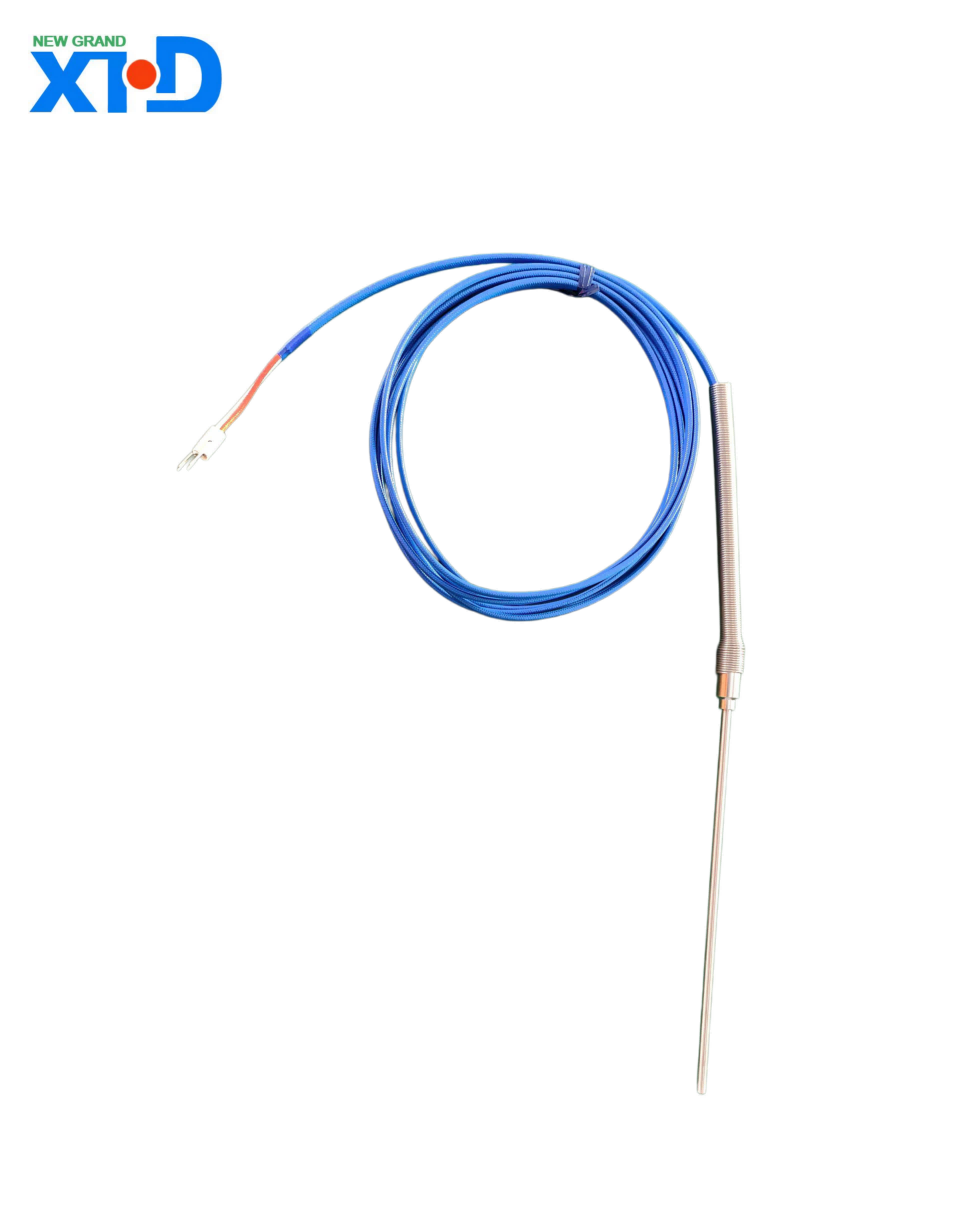
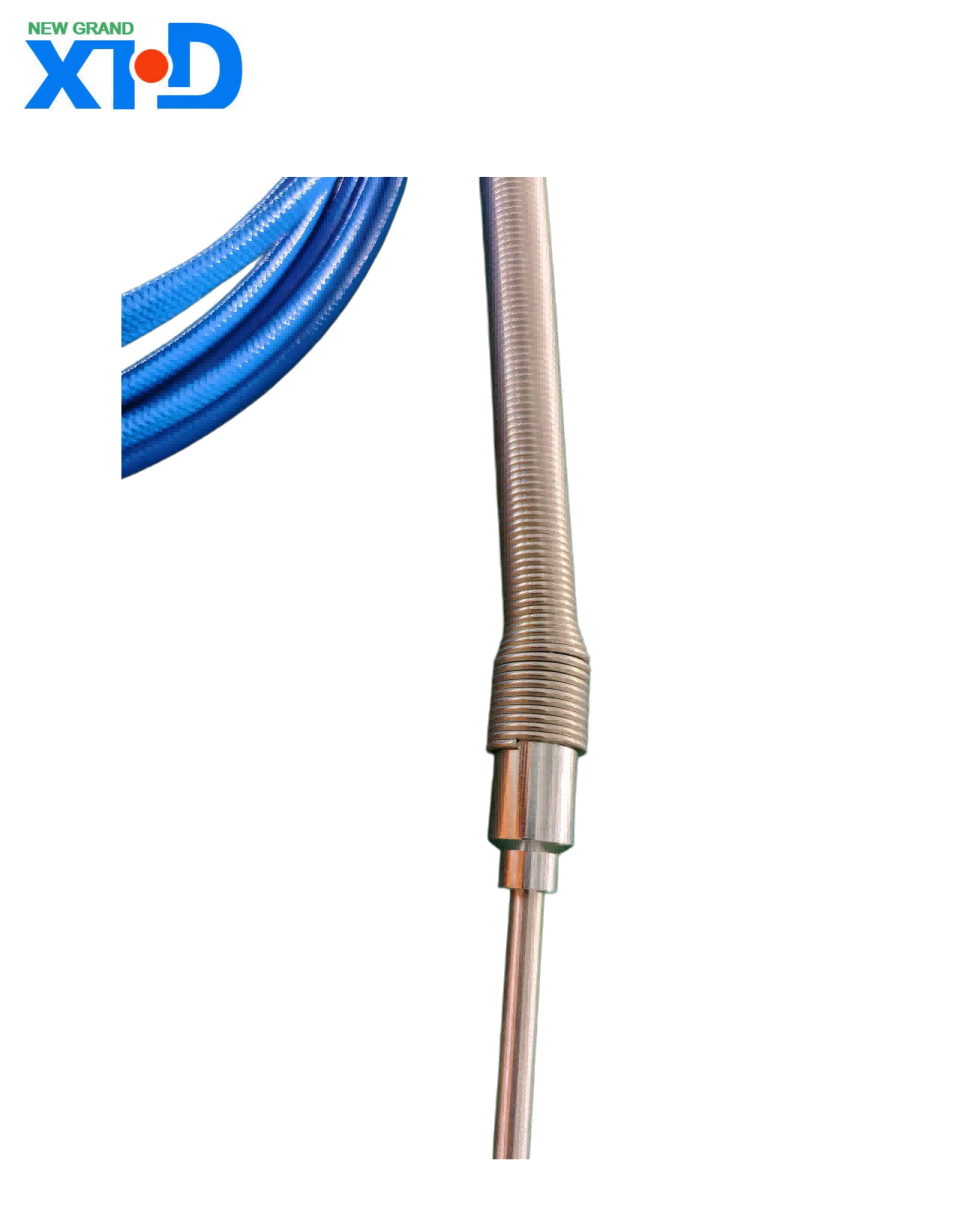
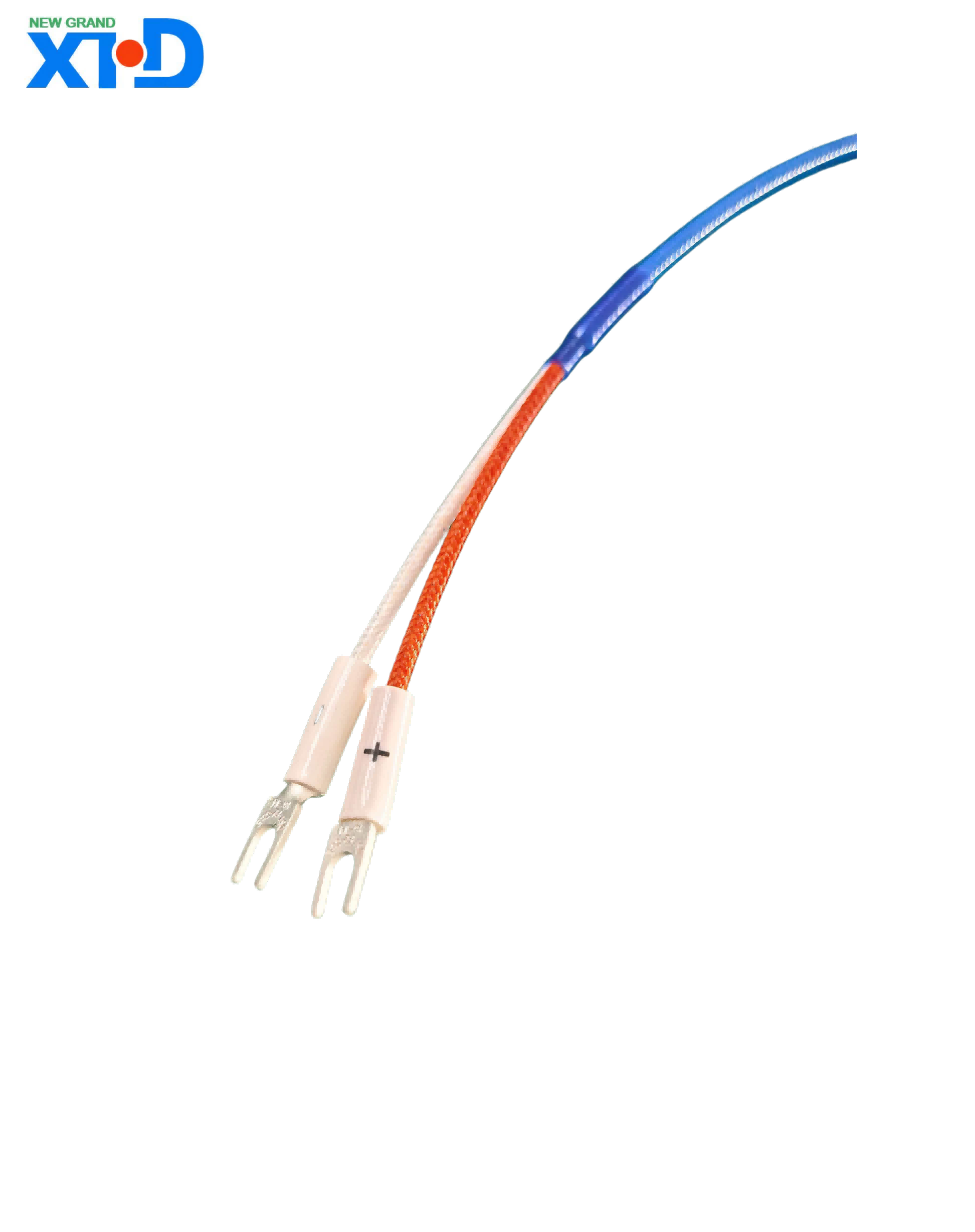
K-type thermocouple is currently the most widely used low-cost metal temperature sensor in the industrial field, often used in conjunction with display instruments, recording instruments, or electronic regulators. It can directly measure the temperature of liquid, steam, gas media, and solid surfaces within the range of -200 ℃ to 1300 ℃. Its positive electrode is made of nickel chromium alloy (Ni: Cr=90:10), and the negative electrode is made of nickel silicon alloy (Ni: Si=97:3). With excellent comprehensive performance, it is widely used in many industries such as petrochemicals, steel smelting, power energy, and food processing.
1、 Product Overview
K-type thermocouple is currently the most widely used low-cost metal temperature sensor in the industrial field, often used in conjunction with display instruments, recording instruments, or electronic regulators. It can directly measure the temperature of liquid, steam, gas media, and solid surfaces within the range of -200 ℃ to 1300 ℃. Its positive electrode is made of nickel chromium alloy (Ni: Cr=90:10), and the negative electrode is made of nickel silicon alloy (Ni: Si=97:3). With excellent comprehensive performance, it is widely used in many industries such as petrochemicals, steel smelting, power energy, and food processing.
2、 Core advantages
Stable and precise performance: With good linearity, large thermoelectric potential and high sensitivity, stable temperature and potential conversion relationship, Class I accuracy tolerance can reach ± 1.5 ℃ or ± 0.4% t, and Class II accuracy tolerance is ± 2.5 ℃ or ± 0.75% t, which can meet the temperature measurement needs of most industrial scenarios.
Widely applicable: It can work continuously in a wide temperature range of -200 ℃ to 1300 ℃, whether it is material storage monitoring in low-temperature environments or smelting temperature control in high-temperature furnaces, it can play a stable role.
Strong environmental adaptability: excellent antioxidant performance, can operate stably for a long time in oxidizing and inert atmospheres; High mechanical strength, vibration resistance, corrosion resistance, and can adapt to complex and harsh industrial production environments.
Outstanding cost-effectiveness: As a low-cost metal thermocouple, it has a low manufacturing cost and a long service life, achieving a good balance between performance and price, making it an economical choice for industrial temperature measurement.
3、 Precautions
Although K-type thermocouples have significant advantages, they also have usage limitations and cannot be directly used in sulfur, reducing or reducing oxidation alternating atmospheres and vacuum environments at high temperatures; During installation, the insertion depth should not be less than 8-10 times the outer diameter of the protective sleeve to ensure temperature measurement accuracy; In high temperature environments, it is necessary to ensure that the insulation resistance between the thermoelectric electrode and the protective tube, as well as the double hot electrode, meets the specifications to avoid affecting measurement accuracy.


