
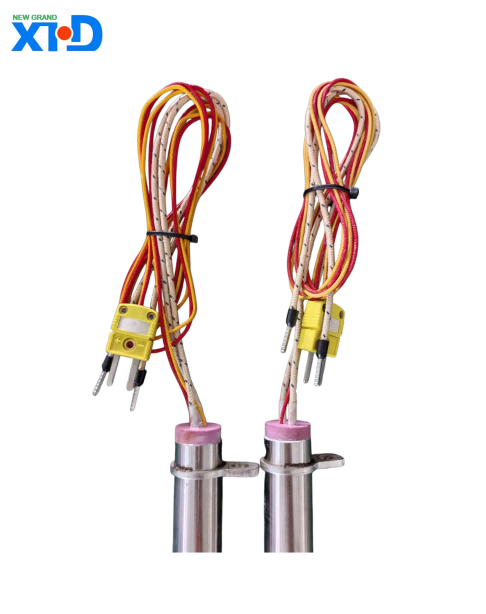
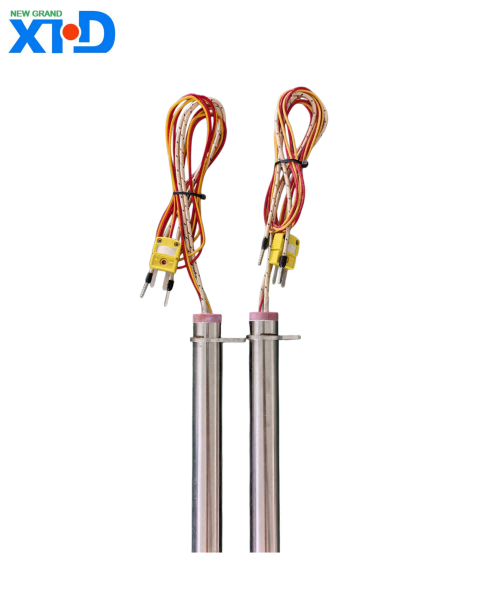
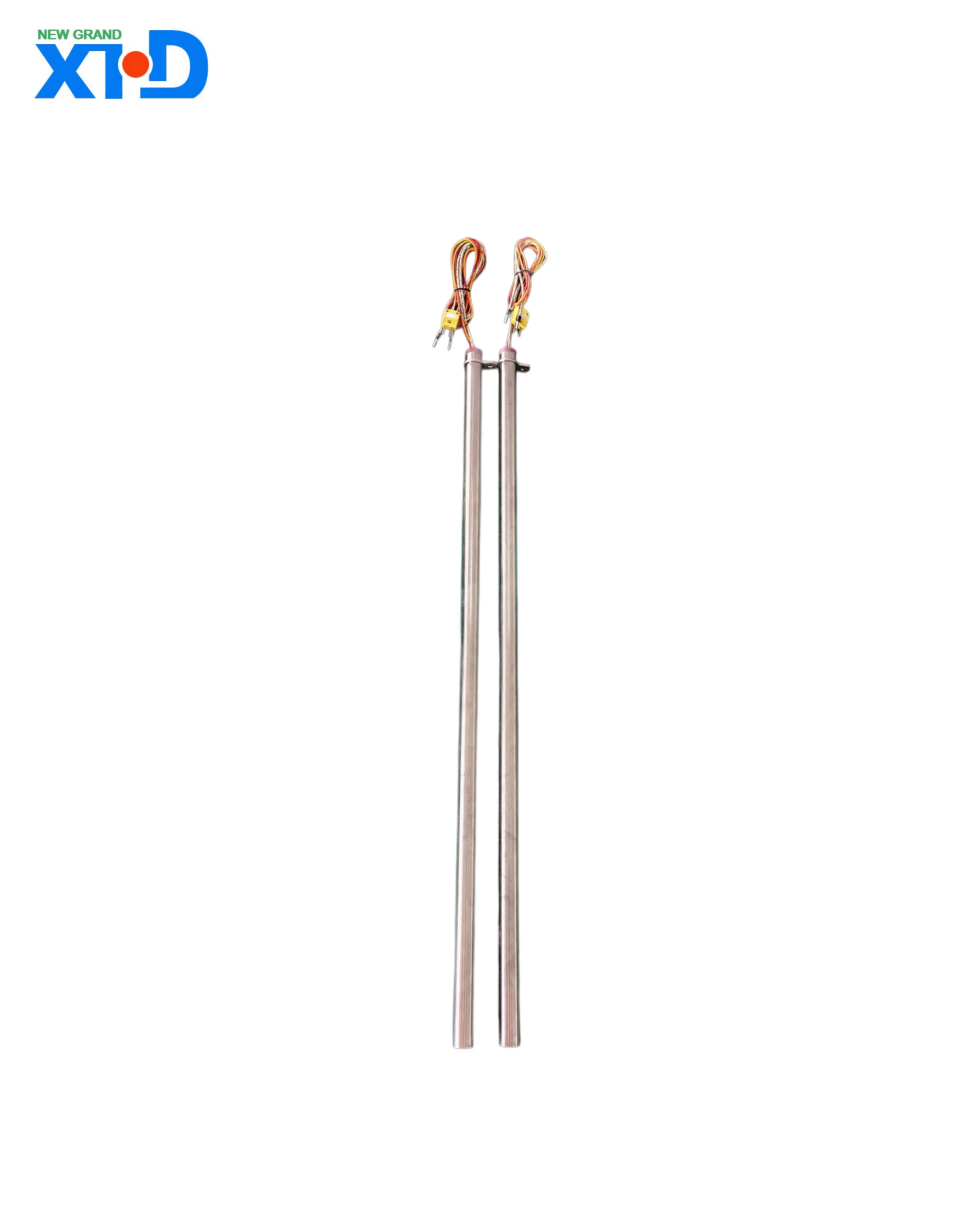
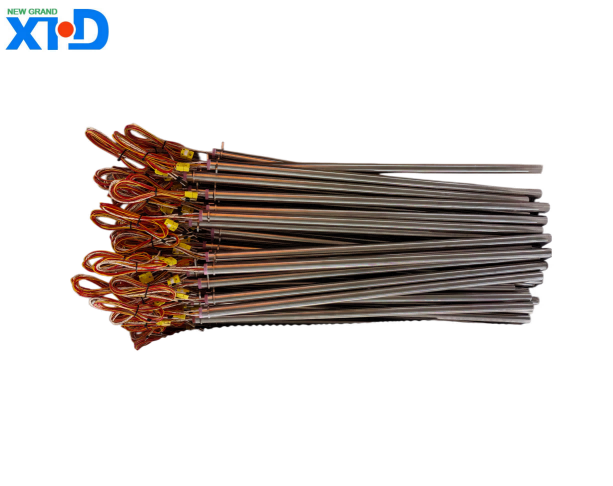
Simple Heater With Sensor, also known as temperature sensing single head electric heating tube, is an upgraded industrial heating element that integrates temperature sensors on the basis of traditional single head electric heating tubes. It is also known as a bullet tube type temperature sensing heater in foreign countries. It continues the structural advantage of a single head electric heating tube with a single end outlet, suitable for heating scenarios where wiring at both ends is not possible. At the same time, with built-in temperature measuring elements, it achieves precise temperature monitoring and control, providing reliable support for fine heating in industrial production. It is widely used in many fields such as plastic molding molds, new energy vehicle heating systems, 3D printers, pharmaceutical machinery, etc.
1、 Product Overview
Simple Heater With Sensor, also known as temperature sensing single head electric heating tube, is an upgraded industrial heating element that integrates temperature sensors on the basis of traditional single head electric heating tubes. It is also known as a bullet tube type temperature sensing heater in foreign countries. It continues the structural advantage of a single head electric heating tube with a single end outlet, suitable for heating scenarios where wiring at both ends is not possible. At the same time, with built-in temperature measuring elements, it achieves precise temperature monitoring and control, providing reliable support for fine heating in industrial production. It is widely used in many fields such as plastic molding molds, new energy vehicle heating systems, 3D printers, pharmaceutical machinery, etc.
2、 Core structure and working principle
(1) Structural composition
This product mainly consists of metal protective sleeves, heating wires, insulation fillers, lead out rods, sealing materials, and built-in temperature sensors. Metal casing is commonly made of high nickel alloy materials such as stainless steel 304, 316L, or Incoloy840, which have excellent high temperature resistance and corrosion resistance; Heating wires are often made of nickel chromium alloy or iron chromium aluminum alloy to ensure efficient and stable heating; High purity magnesium oxide powder is selected as the insulation filler to achieve good insulation while ensuring rapid heat conduction; Temperature sensors are mostly K-type or E-type thermocouples, which can be built into different positions of the pipe according to needs to accurately detect the temperature in different areas.
(2) Working principle
After being powered on, the heating wire uses the current thermal effect to generate heat, which is quickly transferred to the metal casing through the insulation filling material and then conducted to the heated medium. At the same time, the built-in temperature sensor captures the temperature of the tube or medium in real time and converts the temperature signal into an electrical signal for feedback to the temperature control system. When the temperature reaches the preset value, the temperature control system automatically adjusts the heating power to achieve constant temperature control; If the temperature is abnormal, the system will promptly issue an alarm or cut off the power supply, effectively avoiding overheating and damage.
3、 Product advantages
(1) Accurate temperature control
The built-in temperature sensor greatly improves the accuracy of temperature monitoring, with an error controlled within ± 1 ℃, which can meet the temperature sensitive production process requirements and ensure stable product quality.
(2) Efficient and energy-saving
By precise temperature control, unnecessary heat loss is avoided, and compared to traditional heating elements, energy savings of 15% -30% can be achieved, reducing production costs for enterprises.
(3) Safe and reliable
Real time temperature monitoring and abnormal warning mechanism effectively prevent safety accidents such as fires and equipment damage caused by overheating, adding security to production safety.
(4) Strong customization
According to different heating requirements, the diameter (φ 1.8mm - φ 35mm), length, power, and sensor type can be customized to adapt to diverse industrial scenarios.
4、 Application scenarios
In addition to typical fields such as plastic molding molds and heating for new energy vehicles, it can also be applied to laboratory heat treatment tests, food processing equipment, cigarette machines, and other scenarios that require strict temperature control. For example, in the heating of plastic molds, it can accurately control the mold temperature and improve the molding quality of plastic products; In the battery heating system of new energy vehicles, it can ensure that the battery operates at a suitable temperature and extend its service life.


