
Shenzhen Xinhongda Galvanothermy Technology Co., Ltd. develops advanced Cartridge Heaters with integrated temperature sensing technology, helping industries achieve more accurate heating control and improved process stability.
In modern industrial production, temperature accuracy is no longer just a performance target; it directly affects product quality, production efficiency, and equipment safety. From plastic molding and semiconductor processing to medical equipment and glass manufacturing, heating systems must maintain stable temperatures even under changing operating conditions.
Traditional heating elements often rely on external temperature sensors placed near the heating area. Although this method can work in many applications, it may create delays between actual temperature changes and sensor feedback. Small temperature differences can lead to uneven heating, material waste, or production interruptions.
The integration of internal thermocouples into heating elements has become an important development in temperature management. By placing the sensing component closer to the heat source, the system can respond faster and maintain better control.
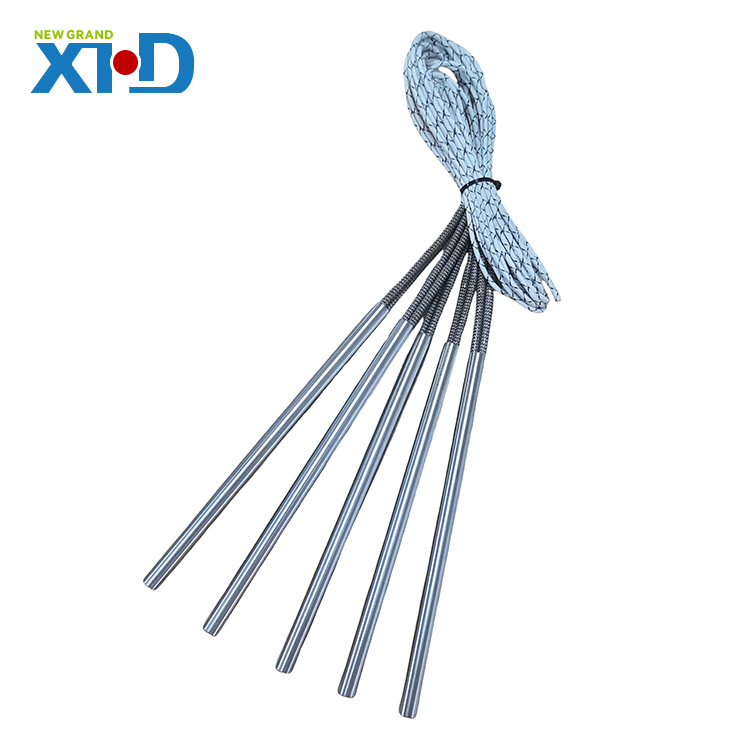
A closed-loop temperature control system works through continuous communication between the heater, temperature sensor, and controller. The sensor measures the actual temperature, sends feedback to the control system, and the controller adjusts power output accordingly.
When a thermocouple is built inside a heating element, the temperature measurement becomes more direct and reliable. Instead of estimating heat conditions from a nearby location, the system receives real-time information from the heating zone itself.
For industrial applications using Cartridge Heaters, this design helps reduce temperature fluctuations and improves heating consistency. The result is smoother operation, better energy management, and fewer issues caused by overheating or insufficient heating.
| Traditional Heating System | Internal Thermocouple Integrated System |
|---|---|
| Sensor installed separately | Sensor positioned inside the heating element |
| Slower temperature feedback | Faster response to temperature changes |
| Possible measurement differences | More accurate heat monitoring |
| Requires additional installation space | More compact system design |
| More adjustment during operation | Easier automatic temperature control |
Many production environments face similar heating problems. Equipment may need to reach high temperatures quickly while maintaining strict temperature limits. In applications such as injection molding, packaging machinery, and electronic component manufacturing, even small temperature variations can influence the final product.
Internal thermocouple technology helps address several common challenges:
During continuous operation, heating conditions can change because of material flow, production speed, or environmental factors. A built-in temperature sensor detects these changes quickly and allows the controller to adjust power output without unnecessary delay.
This is especially useful in processes where temperature stability directly affects product appearance, strength, or performance.
Overheating can damage heating elements, machine parts, or processed materials. A temperature feedback system provides an additional layer of protection by allowing the control system to reduce heating power when temperatures exceed the required range.
For industries handling sensitive materials, this function can improve equipment reliability and reduce unexpected maintenance.
A heater that constantly operates at maximum power may consume unnecessary energy. Closed-loop control allows the system to supply only the required amount of heat, helping reduce energy waste while maintaining stable production conditions.
Different industries have different heating requirements. Shenzhen Xinhongda Galvanothermy Technology Co., Ltd. has developed cartridge heaters solutions used across multiple fields, including industrial equipment, electronics, chemical processing, and manufacturing systems.
Common applications include:
| Industry | Heating Application |
|---|---|
| Plastic Processing | Mold heating, nozzle heating, forming equipment |
| Electronics | PCB processing, LCD equipment, precision manufacturing |
| Glass Industry | High-temperature forming and bending processes |
| Medical Equipment | Controlled heating systems and laboratory devices |
| Packaging | Heat sealing and temperature-sensitive processes |
| Chemical Industry | Fluid heating and process temperature control |
In these environments, accurate feedback from internal thermocouples can help maintain stable operation and improve production consistency.
Established in 2005, Shenzhen Xinhongda Galvanothermy Technology Co., Ltd. has accumulated nearly two decades of experience in electric heating technology. The company focuses on research, development, production, and application of various industrial heating products, including cartridge, immersion, air, band, coil, casting heaters, and temperature sensors.
The company’s production capabilities include automated pipe cutting, wire winding, powder filling, pipe shrinking, bending, welding, and testing equipment. These processes support consistent product quality and allow heating solutions to meet different industrial requirements.
Quality control is also an important part of heater production. Products are designed according to industry requirements and comply with certifications such as ROHS, 3C, and CE. Experienced technical teams continue to optimize heating structures, materials, and temperature monitoring methods for different working environments.
As manufacturing equipment becomes more automated, temperature control systems are becoming increasingly intelligent. Heating components are no longer simple energy conversion devices; they are becoming important parts of smart production systems.
When selecting heating solutions, engineers often consider factors such as operating temperature, installation space, response speed, corrosion resistance, and sensor integration. A well-designed heating system can improve equipment performance while reducing operational difficulties.
The combination of heating and sensing technology represents a practical direction for industrial development. By bringing temperature measurement closer to the heat source, internal thermocouple integration supports more stable processes and helps industries achieve better control without unnecessary complexity.
Internal thermocouple integration provides a practical way to achieve faster feedback, improved safety, and more stable temperature management in modern industrial applications. With continuous innovation in Cartridge Heaters and related temperature control technologies, Shenzhen Xinhongda Galvanothermy Technology Co., Ltd. continues to support industries requiring reliable heating performance and precise thermal control.