
Shenzhen Xinhongda Galvanothermy Technology Co., Ltd. develops Corrosion Resistant Heaters for heating environments where chemicals, moisture, and salt exposure can shorten equipment life.
Chemical plants and coastal facilities have something in common: heating equipment often works in environments that are difficult for ordinary metal components.
Acidic or alkaline chemicals, salt spray, humid air, cleaning agents, and process fluids can gradually attack exposed metal surfaces. A heater may still produce heat after corrosion begins, but its electrical insulation, outer tube, connections, and mechanical strength can deteriorate over time.
This makes material selection especially important for industrial heating systems.
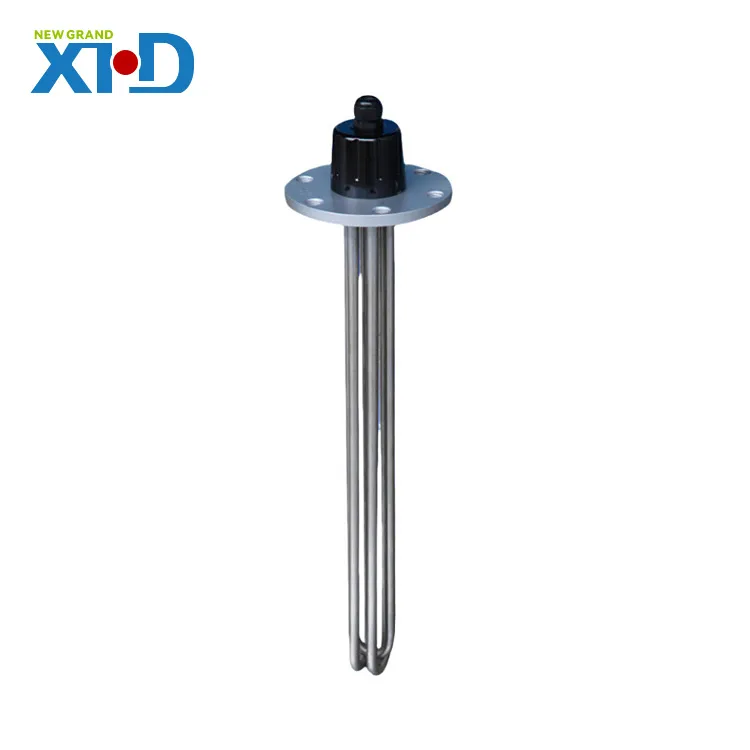
The challenge is not simply finding a material described as "corrosion resistant." The more useful question is whether the complete heater structure is suitable for the specific chemical, temperature, concentration, and exposure conditions.
For Corrosion Resistant Heaters, these factors determine whether the heating element can maintain stable operation over years rather than months.
Corrosion can occur through several mechanisms, and industrial environments may involve more than one at the same time.
Chemical processing equipment may come into contact with acids, alkalis, solvents, salts, or reactive process fluids. The concentration and temperature of the chemical can significantly change its effect on metal.
A material that performs well in a diluted solution at room temperature may behave differently when exposed to a concentrated chemical at elevated temperature.
Coastal installations face another combination: high humidity and airborne chloride ions.
Salt deposits can remain on metal surfaces and attract moisture. Over extended periods, this can contribute to localized corrosion, particularly around joints, exposed surfaces, and areas where moisture accumulates.
For this reason, coastal corrosion should not be treated as a simple "wet environment" problem. Chloride exposure can be considerably more aggressive than ordinary atmospheric humidity.
Temperature can accelerate chemical reactions and influence corrosion rates. This creates a difficult situation for heating equipment because the component is deliberately designed to operate at elevated temperatures.
A suitable corrosion-resistant heater therefore needs to consider both the surrounding chemical environment and the heater's operating temperature.
There is no universal metal that is resistant to every chemical environment. Different applications may require different sheath or structural materials.
Shenzhen Xinhongda Galvanothermy Technology Co., Ltd. produces heating elements using materials including Teflon, titanium, and 316L stainless steel, depending on the application.
| Material | Typical Advantage | Where It May Be Considered |
|---|---|---|
| 316L Stainless Steel | Good resistance to many corrosive environments | Chemical equipment, industrial fluids |
| Titanium | High resistance to many chloride-containing environments | Coastal and chemical applications |
| Teflon | Strong chemical resistance | Aggressive chemical environments |
| Standard Stainless Steel | General-purpose corrosion resistance | Less aggressive environments |
The table is only a general reference. Actual suitability depends on the chemical composition, concentration, operating temperature, exposure time, and mechanical requirements.
This is one reason why simply choosing the most expensive material is not necessarily the best engineering decision. The material needs to match the actual working environment.
The answer depends on how the heater is designed and used.
A corrosion-resistant heating element can have a long service life when the selected material is compatible with the surrounding environment and operating conditions remain within its intended range.
However, corrosion resistance does not mean unlimited resistance.
For example, a heater installed in a chemical tank may experience continuous immersion, while another heater in the same facility may only encounter chemical vapors. These two components can face very different corrosion conditions even though they are located in the same plant.
The same principle applies to coastal facilities. A heater installed inside a protected electrical enclosure has a different exposure level from one positioned outdoors near the sea.
Even a suitable material can suffer premature damage if the installation creates unfavorable conditions.
Common factors include:
Corrosion resistance should therefore be considered as part of the entire heating system rather than as an isolated material specification.
Corrosion-resistant heating technology is relevant to many industrial processes where ordinary heating elements may face chemical or environmental exposure.
In chemical facilities, heaters may be used for tanks, fluids, pipelines, process equipment, and temperature maintenance.
In coastal environments, they can be considered for equipment exposed to humid air, salt spray, seawater-related conditions, or outdoor industrial atmospheres.
Other applications can include:
| Application | Main Environmental Concern |
|---|---|
| Chemical tanks | Acid, alkali, solvent, or salt exposure |
| Fluid heating | Direct contact with process liquids |
| Coastal equipment | Humidity and chloride exposure |
| Shipbuilding | Marine atmosphere and moisture |
| Water treatment | Chemicals and continuous moisture |
| Industrial processing | Combined heat and chemical exposure |
This explains why corrosion-resistant heating products are not limited to chemical plants. Similar requirements can appear in shipping, power, water treatment, electronics, and other industrial fields.
A useful specification process starts with the operating environment rather than the heater model.
At minimum, several questions should be answered:
What chemical will contact the heater? The chemical name alone may not be enough. Concentration and temperature can also influence material compatibility.
Will the heater be immersed? Immersion creates different corrosion and heat-transfer conditions compared with surface or air heating.
What temperature is required? Both the process temperature and heater surface temperature should be considered.
How long will the heater operate? Continuous operation creates different thermal and corrosion stresses from occasional heating.
Will the equipment be installed outdoors? Outdoor installations may require additional consideration for rain, humidity, salt spray, and electrical protection.
These details help determine whether 316L, titanium, Teflon, or another construction approach is appropriate.
Corrosion is only one part of heater life.
An industrial heating element must also maintain electrical insulation, stable resistance, mechanical integrity, and appropriate heat transfer. If corrosion damages the sheath or electrical insulation, the problem can eventually become an electrical safety issue rather than simply an appearance problem.
Temperature control also matters. Excessive surface temperature can accelerate material degradation in some environments, while insufficient heating can affect the production process.
Therefore, long-term performance depends on the combination of material compatibility, heater construction, temperature control, installation, and operating conditions.
The most reliable approach is to treat the heating environment as part of the product specification.
For facilities operating near corrosive chemicals or marine environments, Corrosion Resistant Heaters should be selected according to actual exposure rather than a general corrosion-resistance label. A titanium heater may be appropriate for one chloride-rich application, while 316L or Teflon may make more sense for another.
Shenzhen Xinhongda Galvanothermy Technology Co., Ltd., established in 2005, produces cartridge, immersion, air, band, coil, casting, and corrosion-resistant heating products for industrial applications. Its product range includes Teflon, titanium, and 316L heating solutions designed for different operating environments.
Years of service in a chemical plant or coastal facility cannot be guaranteed by corrosion resistance alone. The real determining factors include the chemical environment, material compatibility, operating temperature, exposure method, installation conditions, and electrical protection.
The right Corrosion Resistant Heaters are therefore not simply the ones made from the strongest-looking material. They are the ones whose construction matches the environment in which they will actually operate. For industrial heating applications requiring materials such as Teflon, titanium, or 316L, Shenzhen Xinhongda Galvanothermy Technology Co., Ltd. provides several heating configurations for different process conditions.