
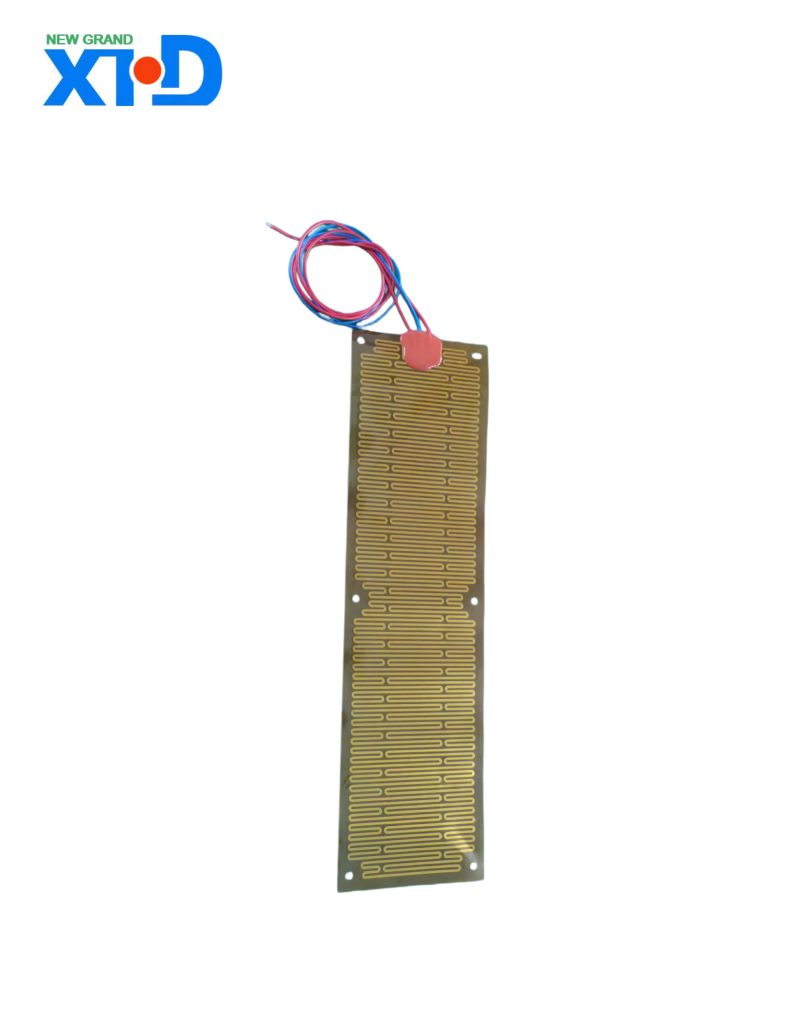
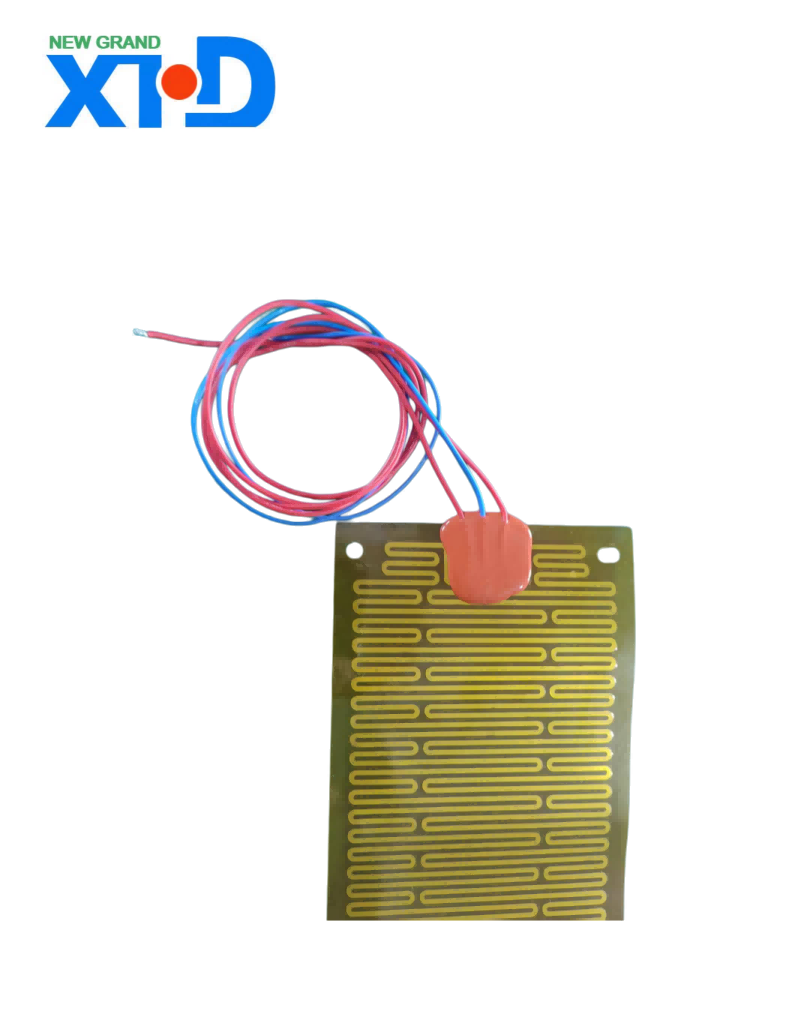
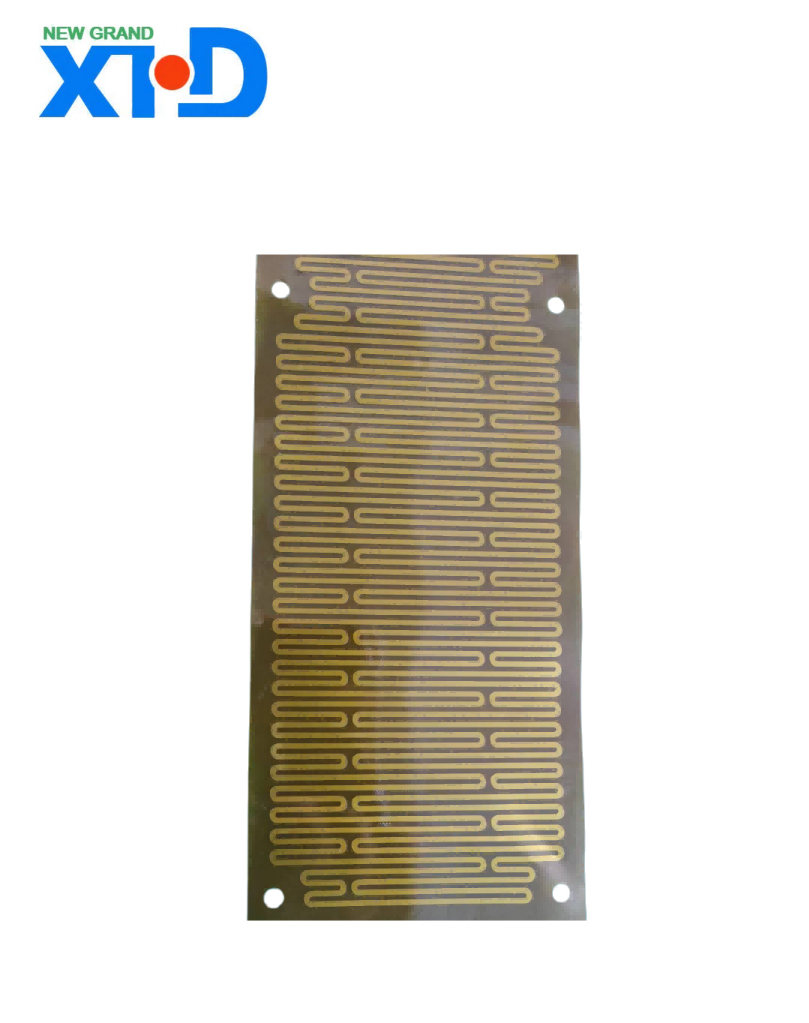
PI heating sheet, also known as polyimide film electric heating film, is a flexible electric heating element made of polyimide film as the outer insulator and metal foil, metal wire, or nickel-chromium alloy etched heating sheet as the inner conductive heating body, which is thermally bonded under high temperature and pressure. This product, with its characteristics of softness and bendability, ultra-thinness, uniform heating, good insulation, and high temperature resistance, has been widely used in various fields such as aerospace, industry, medical equipment, consumer electronics, new energy, and automotive equipment. It can achieve rapid heating and precise temperature control, providing reliable temperature protection for equipment in various fields.
I. Product Overview
PI heating sheet, also known as polyimide film electric heating film, is a flexible electric heating element made of polyimide film as the outer insulator and metal foil, metal wire, or nickel-chromium alloy etched heating sheet as the inner conductive heating body, which is thermally bonded under high temperature and pressure. This product, with its characteristics of softness and bendability, ultra-thinness, uniform heating, good insulation, and high temperature resistance, has been widely used in various fields such as aerospace, industry, medical equipment, consumer electronics, new energy, and automotive equipment. It can achieve rapid heating and precise temperature control, providing reliable temperature protection for equipment in various fields.
II. Product Models and Classification (I) Classification by Temperature Resistance Level Conventional PI Heating Sheets: With a long-term operating temperature of up to 200℃, they are suitable for most scenarios with moderate temperature requirements, such as battery heating in consumer electronics and patient warming devices in medical equipment.
High-temperature PI heating sheet: It can withstand temperatures up to 300℃ and can sustain long-term exposure to 250℃, leading the industry. It is suitable for electric heating products that require high heating temperatures, such as straightening irons, instant hot cups, coffee makers, and steam irons.
(2) Classified by application field: Special PI heating sheets for aerospace and military industry: Certified according to GJB9001C-2017 national military standard, they possess adaptability to extreme temperature environments and resistance to vibration and shock, making them suitable for thermal management systems in aerospace equipment such as polar orbit/geostationary orbit satellites and Long March series carrier rockets.
PI heating sheet dedicated to new energy vehicles: It is primarily used for heating and insulation of lithium battery packs, ensuring the normal charging and discharging performance of the battery in low temperature environments. It can also be applied to scenarios such as rearview mirror defrosting and seat heating.
PI heating sheet dedicated for medical equipment: It can be used for heating surgical instruments, patient warming devices, blood analyzers, and other medical equipment, meeting the requirements of precise temperature control and hygiene safety in medical scenarios.
PI heating sheet for consumer electronics: suitable for battery heating and screen defogging of devices such as smartphones and tablet computers, as well as beauty and hairdressing equipment such as straightening irons, curling irons, and beauty instruments.
III. Core Technical Parameters (I) Electrical Performance Parameters Operating Voltage: 0 - 480V, customizable according to different application scenarios to meet the voltage requirements of various devices.
Power density: The surface power density of conventional models can reach 7.8 W/cm², and some products can be adjusted within the range of 0.15 - 7.8W/cm² according to specific needs, ensuring efficient heating in confined spaces.
Insulation resistance: ≥500Ω. For some high-end products, the dielectric strength at UDC 500V is ≥ 200MΩ, demonstrating excellent electrical insulation performance and ensuring safe use.
Electrical resistance: UAC ≥ 2000V, capable of withstanding high voltage surges, thus avoiding safety accidents caused by electrical malfunctions.
Resistance tolerance: The nominal value is ±10%, and the tolerance for some products can be as low as ±2%, ensuring the stability and consistency of heating power.
(II) Thermal performance parameters Operating temperature range: The long-term operating temperature for the conventional type is ≤232℃, with a low temperature range down to -60℃; the high-temperature type can withstand temperatures up to 300℃ and can operate at temperatures up to 250℃ for extended periods, making it suitable for extremely harsh temperature environments.
Heating speed: Some products can heat up quickly in as little as 20 seconds, capable of rapidly converting electrical energy into thermal energy for rapid temperature rise.
Temperature uniformity: Utilizing a planar heating method, the heat distribution is uniform, ensuring that temperature differences on the heated surface are kept within a narrow range, meeting scenarios with high requirements for temperature uniformity.
(III) Mechanical performance parameters: Thickness: Typically ranging from 0.13 to 0.4mm, with conventional products having a thickness of about 0.2mm. Some ultra-thin products can have a thickness as low as 0.08mm. The lightweight and thin design allows for a small footprint, facilitating installation and integration.
Weight: ≤278 g/m², with a weight of only 0.023 - 0.037g/cm², effectively reducing the overall weight of equipment, especially suitable for weight-sensitive applications in aerospace, consumer electronics, and other fields.
Bending radius: It can reach a minimum of 1.0mm, possesses excellent flexibility, can be bent and folded, and can even conform to the surfaces of objects of various shapes, adapting to a wide range of complex installation environments.
Service life: Up to 60,000 hours, significantly exceeding traditional heating wires. Suitable for high-reliability applications, reducing equipment maintenance costs.
IV. Product Structure and Manufacturing Process (I) Product Structure PI heating sheets typically feature a three-layer structure. The first and third layers are polyimide (PI) film insulation layers, with thicknesses generally ranging from 0.05 to 0.08 millimeters, providing excellent electrical insulation and mechanical protection properties. The middle layer is a metal heating element, such as stainless steel, copper, iron-chromium-aluminum, or nickel-chromium alloy etched heating sheets, which are processed into customized heating circuits through precision etching technology to achieve efficient and uniform heating.
(2) Preparation of base materials for manufacturing process: Select high-purity polyimide film and metal foil to ensure the quality stability of raw materials.
Circuit etching: Utilizing precision etching technology, the metal substrate is processed into a designed heating circuit, ensuring the accuracy and consistency of the circuit.
High-temperature hot pressing: The etched metal heating element and polyimide film are laminated through a high-temperature and high-pressure thermal bonding process (temperature 200 - 350℃, pressure 5 - 15MPa) to form an integrated structure, ensuring the robustness and stability of the product.
Performance testing: Conducting various tests on finished products, including electrical, thermal, and mechanical performance tests, to ensure that the products meet quality standards.
5. Product Advantages: Flexible Fit: Soft and bendable, it can adapt to the heating needs of various complex shapes of surfaces. Without modifying the equipment structure, it can perfectly fit various irregular surfaces, solving the problem that traditional heating sheets cannot fit irregular equipment.
Efficient and precise: With uniform heat generation and a thermal conductivity rate of >2W/(m・K), it can quickly convert electrical energy into thermal energy, achieving rapid heating and precise temperature control, meeting the high-precision requirements for temperature control in various fields.
Safe and reliable: With excellent insulation and high temperature resistance, it maintains stable electrical performance and mechanical strength even under extreme temperature conditions and complex working environments, ensuring safety and reliability during use.
Strong customization: Customized design can be provided for product parameters such as size, shape, power, and voltage according to specific customer needs, meeting personalized requirements for different application scenarios.
Energy conservation and environmental protection: High thermal efficiency, capable of significantly reducing energy consumption, meeting the requirements of modern society for energy conservation and environmental protection.
VI. Detailed Explanation of Application Scenarios (I) Aerospace Field In aerospace equipment such as satellites and carrier rockets, PI heating sheets are primarily utilized in thermal management systems to ensure the normal operation of the equipment under extreme temperature conditions. For instance, PI heating sheets produced by Shanghai Changqing Industrial have been widely applied in the thermal management systems of China's polar orbit meteorological satellites and geostationary orbit communication satellites. In-orbit operational data indicates that they have been successfully adapted to various satellite models such as navigation satellites and scientific experiment satellites, garnering numerous in-orbit application certifications and positive feedback from satellite model users.
(II) Heating and insulation of lithium battery packs in the new energy vehicle sector: In low temperature environments, PI heating sheets can provide heating and insulation for lithium battery packs, enhancing battery activity, ensuring normal charging and discharging performance, and extending battery life.
Body accessories heating: used for rearview mirror defrosting, seat heating, oil pan heating, etc., to enhance driving comfort and safety.
(III) Heating of surgical instruments in the medical equipment field: Maintaining surgical instruments at an appropriate temperature can avoid discomfort caused to patients due to excessively low temperatures, while enhancing the performance of the surgical instruments.
Patient warming equipment: such as medical mattresses, warming blankets, etc., provides a warm and comfortable treatment environment for patients, which is conducive to their recovery.
Diagnostic equipment temperature control: In diagnostic equipment such as hematology analyzers and biochemical analyzers, PI heating sheets ensure that reagents and samples react at the appropriate temperature, thereby improving the accuracy of diagnostic results.
(4) Battery heating for mobile devices in the consumer electronics sector: In cold environments, it is used to heat the batteries of devices such as smartphones and tablet computers, thereby enhancing battery life and performance.
Beauty and hairdressing equipment: In devices such as straightening irons, curling irons, and beauty instruments, PI heating sheets can quickly heat up and maintain a stable temperature, meeting the precise temperature requirements of beauty and hairdressing.
(5) Anti-freezing and defrosting of industrial equipment in the industrial field: used for anti-freezing and defrosting of outdoor ATM machines, camera housings, liquid crystal displays (LCDs), optical equipment, etc., to ensure the normal operation of equipment in low temperature environments.
Industrial heating and temperature control: Under complex working conditions such as high-temperature melting, low-temperature cooling, and constant temperature maintenance, PI heating sheets can ensure accurate and stable temperature control, thereby improving industrial production efficiency and product quality.
VII. Installation and Usage Instructions (I) Installation Method: Adhesive Backing: Some products come with adhesive on the back, which can be directly pasted onto the surface requiring heating. The installation is simple and quick, suitable for flat or gently curved surfaces.
Mechanical fixation: For scenarios with significant vibration or high requirements for installation firmness, mechanical methods such as screws and buckles can be used for fixation.
Embedded installation: During the equipment design phase, the PI heating sheet can be embedded inside the equipment to achieve an integrated design, saving space and enhancing the aesthetic appearance of the equipment.
(II) Precautions for Use: Avoid Overloading: Strictly adhere to the rated power and voltage of the product to prevent product damage or safety accidents caused by overloading.
Prevent scratching by sharp objects: The surface of the PI heating sheet is relatively fragile, so it should be avoided coming into contact with sharp objects to prevent the insulating layer from being scratched, which could affect the electrical insulation performance.
Regular inspection and maintenance: Regularly inspect the appearance and electrical performance of the PI heating sheet, and replace it promptly if any abnormalities are found to ensure the normal use of the product.
Comply with safety regulations: Ensure that products have the appropriate safety certifications based on the product sales market, such as UL (United States), CE (European Union), RoHS (Restriction of Hazardous Substances), etc. During installation and use, follow relevant safety specifications.
VIII. Quality Certification and After-sales Service (I) Quality Certification International Certification: Some products have passed international certifications such as UL, CE, and RoHS, meeting the quality and environmental protection requirements of the international market.
Domestic certification: Specialized products for aerospace and military industries have passed the GJB9001C-2017 national military standard certification; some enterprises have also obtained ISO 9001, IATF 16949, and other quality management system certifications, ensuring the stability and reliability of product quality.
(II) Customized After-sales Service: We provide customers with one-stop customized services ranging from product design, prototyping to production. We arrange professional technical teams to communicate with customers, ensuring that the products meet their individual needs.
After-sales guarantee: We provide a certain period of product warranty service. During the warranty period, if the product exhibits non-human quality issues, customers can enjoy free repair or replacement services. Additionally, we have established a comprehensive after-sales customer service system to promptly respond to customer inquiries and complaints, providing customers with high-quality after-sales services.

